Life often gives us plenty of things to smile at, but people with crooked teeth don’t always think so. It’s not that they’re not having fun, just that they don’t like to draw attention to their least favourite part of themselves.
(1)Dentists have anecdotally reported that patients who feel self-conscious about their teeth will often try to smile without opening their mouths. They may also cover their mouth while they’re talking, and some may even avoid socialising altogether.
Unfortunately for many teeth straightening candidates, treatment can feel as uncomfortable as the condition.
Take blogger Johnny Monk, for example. The thought of enduring braces as a teen made him opt to keep his crooked bottom teeth. He later regretted this decision because his self-image concerns amplified as he got older. And as he joked on YouTube, “there’s only so much Photoshop I can do”.
Other people, including celebrities like supermodel Georgia May Jagger, have openly embraced their gappy smile, showing people that so-called imperfections are nothing to be ashamed of.
So, while we should all love the skin – and gums – we’re in, there are some other implications of having less than straight teeth. Crooked or crowded teeth and misaligned bites can place you at greater risk of gum disease and be more susceptible to cavities and other common but preventable oral health issues.
So if you do decide it’s time to do something about your less-than-perfect smile, what are your teeth straightening options?
Dentists may recommend teeth straightening surgery if you have a complex overbite, underbite or otherwise misaligned jaw that cannot be corrected using less invasive methods.
That said, even after dental surgery, many patients still require orthodontic assistance like braces for a period after their operation. So people hoping to avoid the months or years of wearing braces or a clear aligner may be disappointed.
So what does orthognathic (dental) surgery involve?
Dental surgery is used on adult patients with congenital defects or skeletal issues, and the purpose is to move the teeth and jaw to a position that is better aligned. This can involve having your jaw wired shut while you recover, which may leave patients suffering from dental surgery pain.
Patients are often placed on a liquid diet for four to six weeks while they recover. It is considered major surgery and, like all treatments of this nature, comes with associated risks.
Thankfully, dental surgery for teeth straightening isn’t the only option. Many people unhappy with their current smile including those with bite issues – can undergo a less invasive dental surgery alternative.
Other alternatives include:
Traditional braces
Braces are possibly the most well-known of all teeth straightening options and are a viable option for many people because they are effective at correcting many common and complex dental issues. While fixed metal braces are still popular, they also come in less visible tooth-coloured forms. Patients can also opt for lingual braces which are fastened to the rear of the teeth for a truly invisible appearance.
Despite their popularity, fixed braces have their downsides.
Braces may need to be on the teeth for up to two years. Trying to clean teeth around braces can be challenging, so you should avoid certain foods and drinks. They need regular adjustments, which means ongoing orthodontic appointments and periods of discomfort while the mouth adjusts.
Finally, clear aligners
Clear aligners have become a popular and accessible option over the past decade. They consist of a series of BPA-free plastic retainers which are worn sequentially over the teeth like an invisible mouthguard. Each aligner (tray) is digitally designed to gradually move your teeth into place. Because there are no brackets and wires involved, it’s a gentler experience for most than traditional braces.
In addition to being barely noticeable, clear aligners are fully removable, which means patients can remove them to eat, drink and brush their teeth.
Treatment times tend to be quicker for clear aligner patients, and they are often more affordable than traditional braces.
Teeth straightening costs money and time
It’s an unfortunate reality that sometimes, cost is a factor in deciding whether to get specialist treatments. Not all orthognathic dental surgery is covered by the NHS, for example. So patients may need to find tens of thousands of pounds to pay for their treatment. Traditional braces can cost up to £5000, but average £1500 to £3000 for adults. The price for clear aligners and clear braces also vary, with brand name aligners costing at least £2300. Other options can cost on average £1300 plus additional fees for scans and miscellaneous costs throughout treatment.
So are there less costly alternatives?
The good news is that there are more affordable options on the market, and moreover, many of the leading clear aligner companies now provide payment plan options to help ensure that cost isn’t the barrier that stands between their patients and their dream smile makeover.
Clear aligner options
You could, of course, ask your dentist about teeth straightening using clear aligners, and while this is a popular option, you will need to attend regular dental visits.
The other alternative is to go with a company like StraightMyTeeth. We supply high quality custom-designed clear aligners and deliver them straight to your door. No dental visits necessary, and no hassle. We’ll send you an impression kit; simply take your impression using the instructions provided and send it back. We’ll do the rest. You’ll receive your aligners, and you’re good to go.
Friendly customer service, affordable clear aligners and no dental appointments are just some of the reasons why people love StraightMyTeeth. Want to know more?
Some people notice they've lost a little weight after starting clear aligner treatment. It can happen, especially during the first few weeks, when taking the trays out for every meal and snack takes some getting used to. Sore teeth can also make eating less appealing for a day or two. The amount of weight lost varies from person to person, and not everyone experiences this change.
Below, we'll break down why it happens, whether it's actually good for you, and what to know before treating your aligners like a diet plan.
Taking your clear aligners out while you're away from home is part of everyday life. The important part is knowing where to keep them until it's time to wear them again. Whether you're eating at a restaurant, traveling, running errands, or attending a social event, instead of leaving them on the table or wrapping them in a tissue or napkin, place them in a protective aligner case. Poor storage can lead to lost, damaged, or dirty aligners.
Can you clean aligners with mouthwash? Mouthwash is not the preferred way to clean clear aligners. It is formulated for rinsing your mouth, while aligner-safe cleaning products are designed to clean the trays. Coloured mouthwash can also stain or discolour clear plastic. Remove your aligners before using mouthwash, then clean your trays separately with cool or lukewarm water and an approved cleaning method.

 The Aligner Diet: Can Clear Aligners Really Cause Weight Loss?
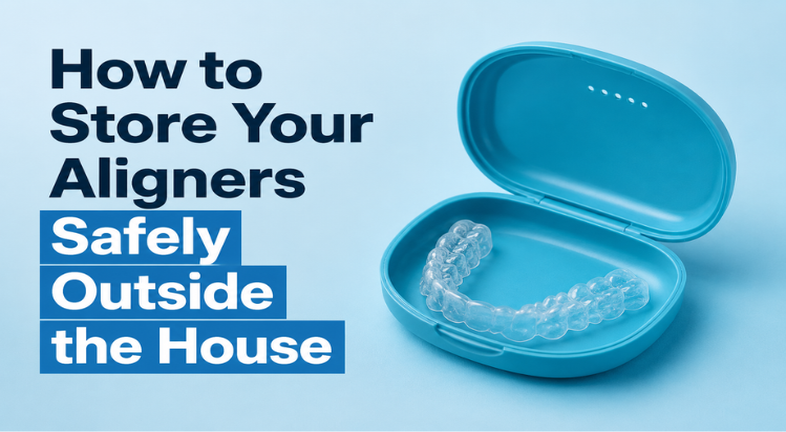 How to Store Your Aligners Safely Outside the House
 Should You Use Mouthwash to Clean Aligners?


Heading