
 UK
 USA
 Australia
Key Takeaways
- Teeth begin drifting back to their original positions almost immediately after you stop wearing clear aligners.
- Skipping aligners for 24 hours can cause minimal shifting and slight tightness without derailing your overall progress.
- Going a full week without aligners allows noticeable tooth movement, making trays uncomfortable or ill-fitting.
- Pausing treatment for a month or longer often causes visible relapse, requiring updated impressions or revised plans.
- Never force an ill-fitting tray onto shifted teeth, as doing so can cause pain and dental damage.
- When recovering from a lapse, your provider may backtrack to previous trays or take new scans.
- Aligner success relies on daily consistency because you cannot make up for missed time by over-wearing trays later.
- Communicating promptly with your provider after a lapse protects both your progress and your financial investment.
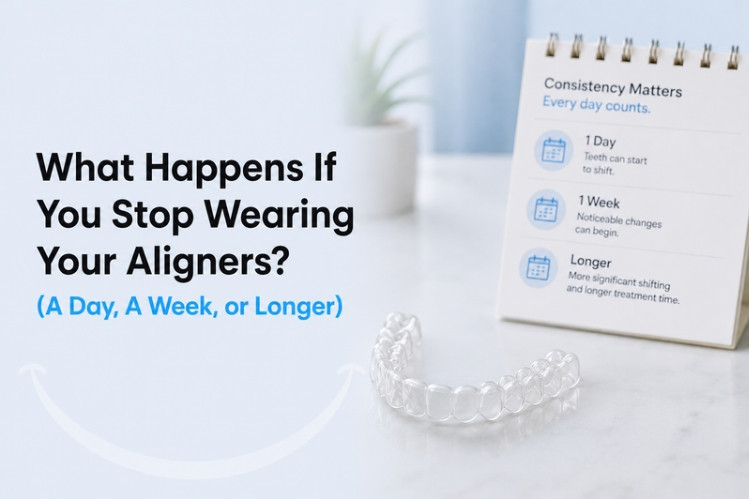
If you stop wearing clear aligners, your teeth start drifting back toward their original position almost immediately, and the longer the break lasts, the harder it becomes to reverse. That's the short answer. But how much damage actually gets done depends on the timeframe. A missed evening is very different from a missed month.
Below, we'll walk through what really happens to your smile and your clear aligner treatment when you skip a day, a week, or longer, plus how to recover if you've already fallen behind.
What Happens If You Skip Aligners for a Day (24 Hours)?
When undergoing orthodontic treatment with clear aligners, skipping a tray for a single day usually won't derail your progress. Teeth are held in place by periodontal ligaments, and these don't shift dramatically in just 24 hours. So, missing aligner wear for a single day is low-risk.
That said, you might notice your aligners feel slightly tighter when you put them back on. This is normal and just means your teeth started to settle a bit. A few things to keep in mind:
- Aim for at least 20 to 22 hours of daily wear, as recommended for most clear aligner treatment plans.
- Removing aligners for meals and brushing is fine and expected.
- One accidentally skipped night won't reset your aligner treatment timeline.
Still, making this a habit is where problems begin.
What Happens If You Stop Wearing Aligners for a Week?
A full week without aligners is where things start to get noticeable. Teeth are more mobile than people realise, and a week gives them enough time to shift, even if it's subtle. You may find your aligners no longer snap into place the way they used to.
This is also when discomfort tends to show up. If you try to force a week-old aligner back on after too long a break, you might feel pressure or soreness as your teeth get nudged back into alignment. This kind of interruption is actually one of the common clear aligner issues patients run into, and it's usually fixable with the right guidance from your provider.
If you've stopped wearing your aligners for a week, don't panic, but don't ignore it either. Reach out to your clear aligner provider before jumping back in.
What Happens If You Stop Aligner Wear for a Month or Longer?
A month or more without aligners often means a real setback in your treatment. At this point, teeth can shift enough that your current aligner tray simply won't fit anymore. This is one of the most common outcomes when patients have stopped wearing clear aligners for an extended stretch.
Here's a rough idea of what tends to happen over time:
| Time Without Aligners | Likely Effect |
| 1 day | Minimal shifting, mild tightness |
| 1 week | Noticeable pressure, some fitting issues |
| 2-4 weeks | Visible shifting, tray may not fit |
| 1 month+ | Possible need for new impressions or trays |
A study on post-orthodontic relapse showed that unretained teeth can start shifting back within weeks as surrounding tissues bounce back. The same principle applies mid-treatment: taking an extended break from your aligners throws off your planned movement, though it usually just requires a quick rescan and a revised plan rather than starting over.
How to Get Your Alignment Back on Track?
Getting back on track starts with an honest conversation with your provider, not with forcing an old tray back into your mouth. Your aligner provider needs to know exactly how long you've gone without wearing your aligners so they can assess the situation properly.
Depending on how much shifting occurred, they may recommend:
- Continuing with your current tray if the fit is still workable
- Moving back a step or two in your treatment sequence
- Taking new scans for updated aligners
- Adjusting your clear aligner wear time goals going forward
Trying to self-correct by wearing an old aligner too aggressively can cause discomfort and won't fix the underlying issue.
Nobody wears their aligners flawlessly every single day, and that's okay. What matters more is catching a lapse early and communicating with your provider rather than letting weeks slip by unnoticed.
Protecting Your Smile Investment
Clear aligners work because of consistency, not intensity. You can't make up for missed hours by wearing them extra long the next day, and you can't undo weeks of drifting overnight. The best approach is simple: wear them as prescribed, and if you ever find yourself having stopped wearing clear aligners for more than a few days, get in touch with your provider or orthodontist right away instead of waiting it out.
Your treatment timeline is flexible enough to handle occasional slip-ups. What it can't handle is silence. Staying proactive protects both your progress and the investment you've already made in your smile.



Heading