
 UK
 USA
 Australia
Key Takeaways
- Yes, you can talk with a sports mouth guard, but expect slightly muffled or slurred speech at first, especially in the first few days.
- Speech clarity improves quickly with practice, and most athletes adjust within a week or two.
- A properly fitted mouth guard, especially a custom sports mouth guard, affects speech far less than a bulky, ill-fitting boil-and-bite version.
- Breathing, comfort, and speech all improve when the guard is trimmed and fitted correctly to your mouth.
- Practising talking, reading aloud, or calling out plays while wearing your guard helps your tongue and lips adapt faster.
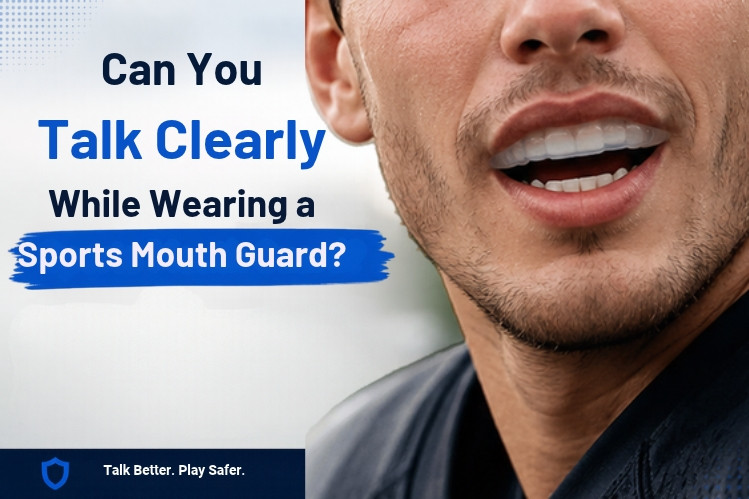
Talking with a sports mouth guard can feel odd at first. Your words may sound slightly muffled, and you might find yourself repeating things when trying to speak to a teammate during a game. So, can you talk clearly with a sports mouth guard?
Yes, but it can take some practice. Your tongue and lips need a little time to adjust to having something new in your mouth. After a few days of wearing it regularly, speaking usually starts to feel easier. A properly fitted mouth guard also makes a big difference, as a bulky or loose guard can make talking much harder.
Why Mouth Guards Affect Speech in the First Place
Your tongue does a lot of quiet, unnoticed work when you speak. It taps the roof of your mouth, brushes against your teeth, and shapes airflow to form sounds like "s," "t," "th," and "l." A mouth guard sits right in the middle of that workspace, covering your upper teeth and often part of your palate. That extra layer changes the space your tongue is used to moving through, which is why speech sounds muffled or slurred at first.
The thickness and fit of the guard make a big difference here. A stock, one-size-fits-all guard is usually bulkier and looser, which means it can shift around while you talk, making speech harder to control. A guard that's been trimmed or custom-moulded to your mouth sits closer to your natural bite line, leaving more room for your tongue to move the way it normally would.
Does the Type of Mouth Guard Matter for Speech?

Not all mouth guards are created equal when it comes to talking. Here's a quick breakdown of how the three main types compare.
| Mouth Guard Type | Fit | Bulk | Speech Impact |
| Stock (ready-made) | Loose, generic | Often thick | Noticeable slurring, hard to keep in place |
| Boil-and-bite | Semi-custom | Medium | Mild to moderate speech impact, improves with moulding |
| Custom-fitted | Moulded to your teeth | Thin, precise | Minimal speech impact, closest to natural talking |
So, a custom-fitted guard consistently causes the least interference with speech, simply because it's built around the actual shape of your mouth instead of a generic mould.
This is one reason many athletes eventually move away from drugstore options toward something more tailored, like a custom sports mouth guard by Caspersmile, which is designed to sit snugly against the teeth without the extra bulk that trips up speech and breathing.
How Long Does It Take to Get Used to Talking With One?
Most people notice a real difference within a few days, and near-normal speech within one to two weeks of regular wear. The adjustment period depends on a few factors:
- How often you wear it daily: Practice speeds up adaptation far more than only wearing it during games.
- The fit of the guard: A well-moulded guard requires less adjustment than a bulky, loose one.
- Your speech habits: People who naturally talk a lot during play (like quarterbacks or point guards) tend to adapt faster out of necessity.
- Guard thickness: Thinner guards designed for speech and breathing ease the transition.
If you're still struggling to talk clearly after a few weeks, it's worth checking whether the guard actually fits your mouth properly, since an ongoing issue is often a fit problem rather than something you simply have to push through.
Tips to Talk Clearly With a Sports Mouth Guard
Getting comfortable speaking with a mouth guard is mostly about practice and small adjustments. A few things that genuinely help:
- Wear it around the house before game day. Practising casual conversation, not just during drills, trains your mouth in low-pressure situations.
- Read out loud for a few minutes daily. This forces your tongue to work through different sounds while the guard is in.
- Slow down slightly when you talk. Speaking a touch slower gives your tongue and lips time to adjust their movements.
- Check the fit regularly. A guard that's shifted out of place will always be harder to talk through than one sitting correctly.
- Trim excess material if using a boil-and-bite. Bulk at the back of the mouth is often the biggest culprit behind slurred speech.
- Consider a thinner or custom option if speech continues to be a struggle after a few weeks of consistent wear.
Is It Harder to Breathe With a Mouth Guard Too?
Speech and breathing issues often go hand in hand, and for similar reasons. A guard that covers too much of the mouth or sits too far back can restrict airflow slightly, especially during intense activity. Most modern mouth guards are designed with this in mind, leaving space for normal nasal and mouth breathing. If you notice you're gasping for air more than usual, it's usually a sign the guard needs trimming or refitting rather than something you need to simply tolerate.
For a deeper look at picking the right type for your sport and mouth shape, it's worth checking out this complete sports mouth guard guide, which walks through the differences between stock, boil-and-bite, and custom options in more detail.
Getting Comfortable Is Part of the Process
At the end of the day, talking with a mouth guard is a skill that develops with repetition, much like getting used to a new pair of shoes or eyeglasses. The initial slurring or mumbling isn't a sign that something's wrong; it's simply your mouth learning to work around a new object. Stick with regular wear, choose a guard that fits well, and give yourself a couple of weeks before judging how it affects your speech long-term.


Heading