 UK
 USA
 Australia
Key Takeaways
- Baking soda can clean retainers, but it is not recommended for regular use because it is abrasive and may scratch the retainer surface.
- Professional cleaning solutions and ultrasonic UV cleaners are safer and more effective for removing stains, odor, plaque, and bacteria.
- If using baking soda, keep the concentration low and use it only occasionally or in emergencies.
- Two common methods are gentle weekly scrubbing with a small amount of baking soda and soaking the retainer in a diluted baking soda solution for 15 minutes.
- Avoid scrubbing too hard, as scratches can trap more bacteria and shorten the lifespan of the retainer.
- Always rinse retainers thoroughly after cleaning and follow the cleaning recommendations provided by your provider.
If you wear a retainer, you already know the struggle. You put it in every day, it sits in your mouth for hours, and somehow it never looks quite as clean as it should. After all, with all the saliva, bacteria, and plaque build-up, a normal water-only cleaning can offer only limited success.
That’s when many people try cleaning a retainer with baking soda. While this can work, you have to be careful with the concentration since baking soda is abrasive and can damage retainers. That’s why it is recommended to go for proper cleaning solutions or UV devices. Still, if you want to try baking soda, here’s what you should know.
Can You Clean Retainers with Baking Soda
It is actually not recommended to use baking soda for cleaning retainers. The reason being its abrasive nature. That’s one of the reasons why it is not recommended to use toothpastes on retainers because they also contain baking soda.
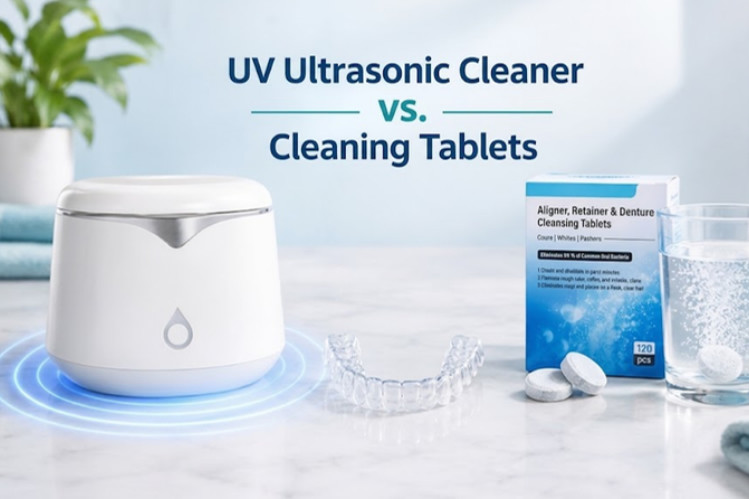
Instead, professionals recommend proper retainer cleaners to keep your smile fresh . These include denture cleaning solutions or ultrasonic UV cleaners for weekly thorough cleaning of retainers to remove odors, stains, plaque, and biofilm. However, if you don’t have access to these things, using baking soda once or twice might not affect your retainer. However, you have to be mindful of the concentration used.
How to Clean Retainers with Baking Soda, Safely
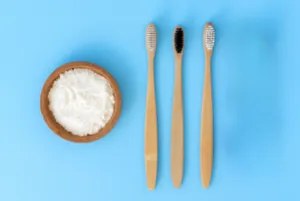
There are two methods of using baking soda to clean retainers. One is the weekly scrub with baking soda paste. And the other is soaking in the baking soda solution. However, in both cases, keep the solution relatively dilute.
The Weekly Scrubbing Method
This is the approach to build into your routine. It takes about two minutes and works well for keeping bacterial buildup from getting out of hand between deeper cleans. Here’s a step-by-step:
- Rinse your retainer under normal tap water as soon as you remove it. This loosens surface debris before it has a chance to dry and harden.
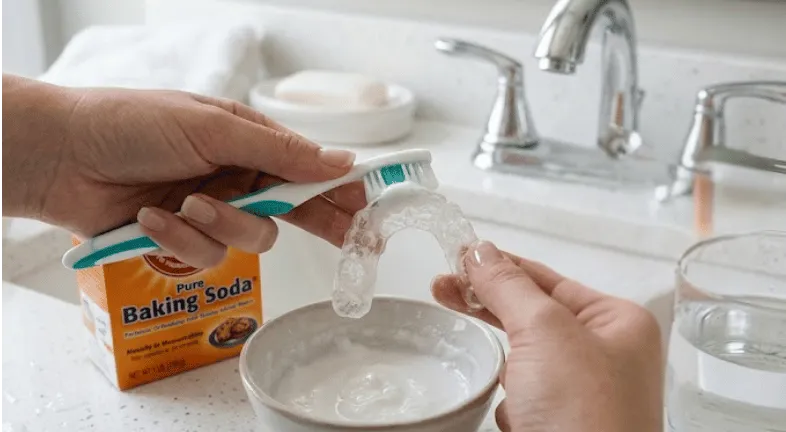
- Sprinkle a small amount of baking soda onto your damp toothbrush.
- Gently brush all surfaces of the retainer, including the inside, outside, and any grooves near the wire if you have a Hawley-style retainer.
- Rinse thoroughly under water until no residue remains.
- Pat it dry and let it air out before putting it back in its case.
The pressure you apply matters. You want to be thorough but not forceful. Scrubbing too hard can scratch plastic retainers, and those scratches create new hiding spots for bacteria. Also, you just have to sprinkle a pinch or two of baking soda, not more than that. And make sure to clean it without letting the mixture sit for long.
The Soaking Method
A baking soda soak can lift heavier buildup or persistent odor. Using baking soda as a retainer cleaner this way is particularly effective for buildup that brushing alone does not fully address.
- Mix one teaspoon of baking soda into a cup of tap water at room temperature and stir until fully dissolved.
- Place your retainer in the solution.
- Let it soak for 15 minutes. That timeframe is sufficient for routine cleaning.
- After soaking, give it a gentle brush to remove any loosened debris.
- Rinse thoroughly with clean water before storing or wearing.
If you are dealing with visible buildup or a persistent smell, soaking can be really effective.
What’s the Best Way to Clean Retainers
Cleaning tablets/solutions or ultrasonic UV cleaning devices are considered the best, safest, and most effective ways to clean a retainer. These are non-abrasive, yet offer deeper cleaning to remove stubborn stains, odor, bacterial biofilm, and plaque build-up.
It is advised to use these instead of baking soda, but choose the latter only for emergencies where you don’t have access to the recommended solutions.
An Effective Cleaning Method, But Use It Rarely
While baking soda can be really effective for cleaning retainers, it is also abrasive. That means it can leave scratches on your retainer and reduce its life. So, always use the cleaning methods that are recommended by your provider and only opt for baking soda for quick, emergency situations. But even then, make sure not to use a high concentration of it.