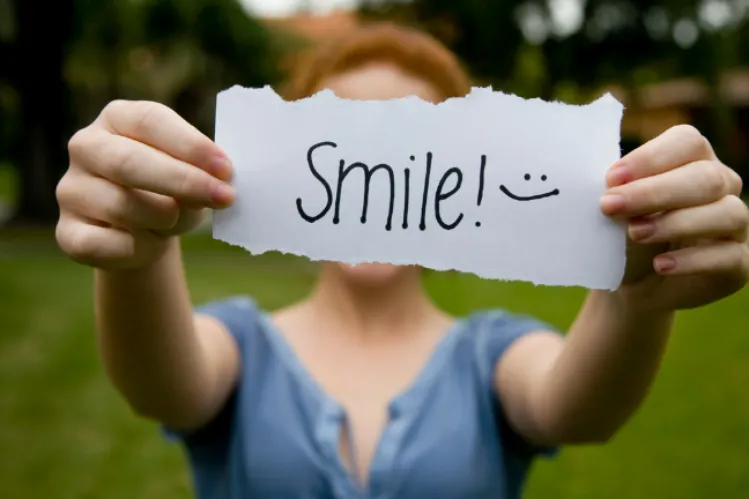
If you find yourself tightening your lips or tilting your head away in group photos, you are not alone. Many people deal with smile anxiety when their teeth don’t look the way they want them to. And while traditional orthodontic treatments can fix that, they often feel overwhelming. Long appointments, visible wires, and lifestyle restrictions hold people back.
That being said, clear aligners for smile anxiety offer a different path. A straighter smile that can be achieved without the usual inconvenience, and your confidence does not have to wait until the end of treatment. Here’s more on it.

Anyone who’s not happy with how their smile looks has faced this. The moment anyone brings up the idea of taking a photo, your nervous system starts responding. You become anxious, you hesitate, and you feel pressure, as if undergoing a depressive episode. That’s smile anxiety.
In response, you avoid clicking photos totally. And if there’s no escape, you pose, change profile, tweak lip position, only to look visibly awkward in the photo instead of successfully hiding the supposed flaw. Let’s dive deeper into it.
Group photos capture more than just faces. They freeze expressions, posture, and confidence in a single frame. When someone feels uneasy about their smile, that discomfort is often magnified in social settings. It becomes harder to relax, and natural expressions are replaced with guarded ones. Thus, group photo confidence goes down.
You may have noticed how your focus shifts the moment a camera appears. Instead of enjoying the moment, your attention is directed to how your teeth might look. That hesitation is not imagined. It is a common response tied to self-perception.
Smile anxiety does not stay limited to photos. It gradually influences how you interact in conversations, meetings, and even casual gatherings. Over time, fewer candid smiles are seen, and more controlled expressions are adopted. Confidence is chipped away subtly. While it may not always be acknowledged, it is certainly felt in everyday interactions.
However, it is not the end of the world. Because clear aligners can help you get that smile confidence back in the most hassle-free way out there.

You see, we know that misaligned teeth or bite issues ruin the uniformity of the smile, causing smile anxiety. But what’s equally true is that the traditional orthodontic treatment is a big hassle, and most don’t want to go through it.
That’s where clear aligners come in. They are comfortable, discreet, and exceptionally convenient. Let’s talk more about them.
Clear aligners are designed to blend in with your lifestyle. Unlike traditional braces, they are nearly invisible when worn. This makes them a discreet orthodontic treatment that does not draw attention during social interactions.
Your routine is not disrupted significantly. Aligners can be removed while eating or brushing, so dietary habits and hygiene routines remain mostly unchanged. Adults and young professionals alike often appreciate this flexibility.
Traditional braces come with frequent adjustments and occasional discomfort. With clear aligners, the process is simplified. A series of custom trays is provided, and each set is worn for a specific period before moving to the next.
Fewer clinic visits are typically required, and progress is guided through planned stages. While mild pressure is experienced when switching trays, it is generally more manageable. The experience feels less intrusive, and that difference matters.
Clear aligners are generally faster than traditional braces. Some at-home aligner providers, like Caspersmile, often fix mild to moderate cases in just 3 to 5 months. For more severe cases, in-clinic aligner options are used, and they too work relatively faster than metal braces. Here’s our more detailed take on clear aligner treatment duration .
So, overall, the social impact of straightened teeth cannot be neglected, and clear aligners are considered the best at achieving it in the most hassle-free way possible.
This is where most people get confused. While it’s pretty evident why clear aligners are the best for building your smile confidence, you don’t actually know which type to go for: at-home versions or in-clinic ones.
Well, in a nutshell, if you have mild to moderate alignment or bite issues, at-home options work best. They are faster, much more hassle-free, and quite affordable. But, if you have more severe issues, in-clinic options are the best option. Here’s more about it.
At-home aligner kits have become increasingly popular for mild to moderate cases. These systems typically involve remote assessments, where impressions or scans are reviewed by dental professionals.
Custom aligners are then delivered to the doorstep, and progress is tracked through tracking apps. This approach offers convenience and accessibility. It is often more affordable, and no in-person visits are required.
However, suitability must be evaluated carefully. Not every case can be treated remotely. When used appropriately, though, it provides an efficient way to achieve a smile makeover with aligners. Here’s more on how at-home clear aligners work .
For individuals with more complex alignment issues, in-office treatment is usually recommended. Orthodontists provide detailed assessments and closely monitor progress throughout the process.
Adjustments are made as needed, and treatment plans can be modified based on how teeth respond. This level of supervision ensures that more challenging cases are handled safely and effectively.
While the structure is more formal, the reassurance it provides is valuable. Patients often feel more secure knowing that their treatment is being guided closely.
In the end, clear aligners for smile anxiety offer a modern solution to a very real concern. The journey to straighter teeth no longer has to involve visible appliances or major lifestyle adjustments. Instead, a more flexible and discreet option is available.
Confidence can be rebuilt step by step. Your smile does not have to be hidden in photos or held back in conversations. With the right approach, it can be shown naturally, without hesitation.

Relax your jaw, keep your lips slightly parted, and think of something that genuinely makes you happy to create a natural expression. Practicing in the mirror can also help you find your most comfortable angle.
You can speak and interact normally while wearing aligners, as they are designed to be subtle and comfortable. If needed, they can be removed briefly during meals or special occasions.
Most people do not notice them at all, especially in casual conversations. They are designed to be nearly invisible, which makes them a discreet orthodontic treatment.
Clear aligners primarily shift teeth, not bone structure, so major facial changes are unlikely. However, subtle improvements in your smile and bite can enhance overall facial balance.
There is no single “best” age, as aligners work for teens and adults alike. As long as your teeth and gums are healthy, treatment can be effective at almost any stage of life.
Curated the best for your knowledge
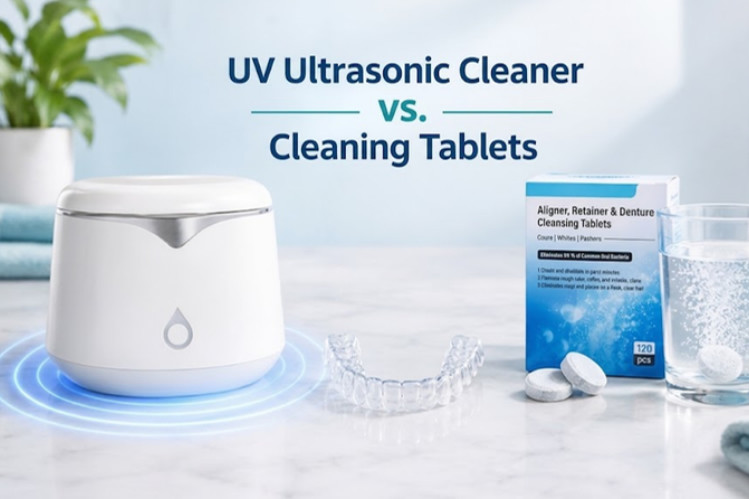 UV Ultrasonic Cleaner vs. Cleaning Tablets: Which Keeps Aligners Cleanest?
A UV ultrasonic cleaner offers a deeper, device-based cleaning approach, while cleaning tablets give you a simple soak-and-rinse option. Both can help remove daily buildup, but the way they clean your aligners is quite different.
Read More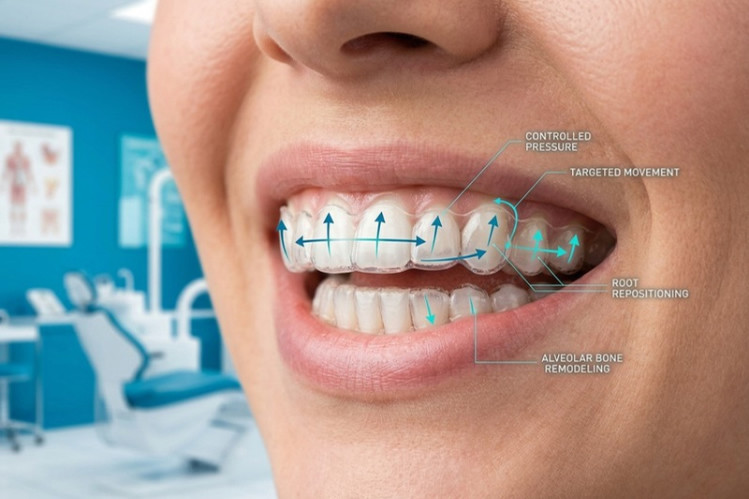 Science Behind a Perfect Smile: How Clear Aligners Shift Your Teeth Safely
Clear aligners work by applying controlled, gentle pressure to specific teeth, gradually guiding them into planned positions over time. Each custom-made aligner fits over the teeth and creates small movements according to a digital treatment plan. As the teeth respond to this pressure, the surrounding bone and periodontal ligament remodel to support their new positions. Caspersmile uses a planned series of clear aligners to guide tooth movement throughout treatment.
Read More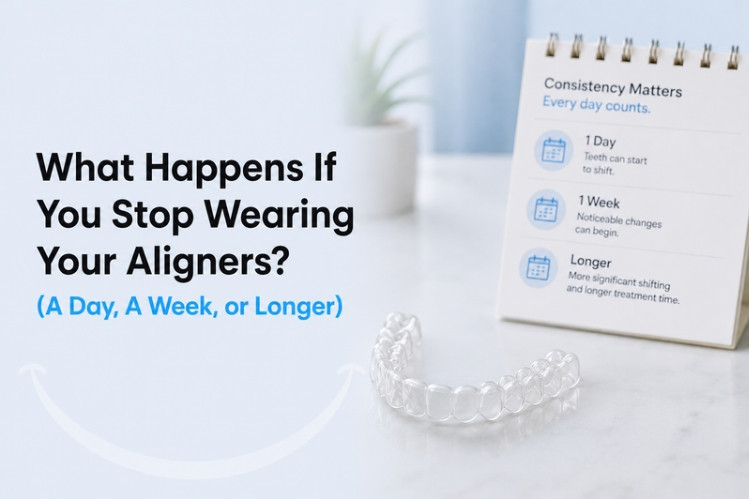 What Happens If You Stop Wearing Your Aligners? (A Day, A Week, or Longer)
If you stop wearing clear aligners, your teeth start drifting back toward their original position almost immediately, and the longer the break lasts, the harder it becomes to reverse. That's the short answer. But how much damage actually gets done depends on the timeframe. A missed evening is very different from a missed month.
Read More
 UK
 USA
 Australia