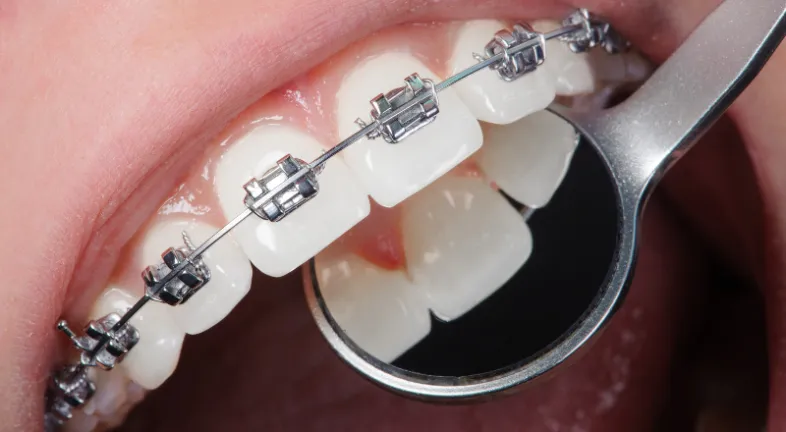
If you or your child may need orthodontic treatment, you might be asking: Can you get braces on the NHS? The answer is yes, but it comes with some conditions. In the UK, the National Health Service (NHS) offers free or reduced-cost dental care. However, access to orthodontic services like braces isn't guaranteed for everyone, it depends on specific eligibility criteria.
In this guide, we’ll cover everything you need to know, including who qualifies for NHS braces, the types of braces available, how long you might wait, and when private treatment could be a better option.
Braces aren’t just for a nicer-looking smile, they can improve your overall oral health by fixing:
Starting treatment early in life, especially during childhood or teenage years, can help prevent more serious dental issues later on. For adults, straighter teeth are often easier to clean, helping to prevent tooth decay and gum problems .
There are many benefits of having perfectly aligned teeth, such as:
Many people feel their smiles stick out like a sore thumb when they have misaligned teeth. They may even avoid showing off their smile in public. Straight teeth have a much healthier appearance and will make you look better.
A mouth full of crowded or crooked teeth is harder to clean because there are surfaces that you’re unable to reach. Failure to properly clean teeth can lead to dental caries and a host of gum problems. These include receding gums, inflammation, and gum disease. Straight teeth reduce obstructions, making it easier to clean all surfaces. Also, crowded teeth exert pressure on surrounding teeth, leading to tooth damage and tooth loss. This is not a problem when they sit perfectly aligned in the mouth.
Some people with misaligned or crooked teeth find chewing uncomfortable. A straight smile helps you chew and break down food properly. Straight teeth allow for the effective distribution of biting forces equally over all teeth. Failure to correct a bite can result in tooth chipping and abnormal wear and tear of teeth.
One of the symptoms of teeth misalignment is temporomandibular joint (TMJ) dysfunction, which can cause jaw pain, headaches, and jaw stiffness. All of these issues can be alleviated once your bite has been corrected.
Like having white teeth, straight teeth are a great confidence booster that can help you take your self-esteem to the next level.
Before exploring how braces on NHS can be helpful, let us explore the different orthodontic options for straighter teeth.
Traditional metal braces are made from high-grade stainless steel (sometimes combined with titanium). These are attached to each tooth, and a flexible metal wire is threaded through each one to put a small amount of pressure on them. Ultimately, this moves teeth into the desired position. Some people are conscious of how metal braces look, preferring more discreet options. The average cost of metal braces is £1,500 – £3,000.
Ceramic braces have clear or tooth-coloured brackets that are glued to the front surfaces of teeth. Ceramic braces use the same mechanism as metal braces. Brackets are fixed on your teeth and linked by an archwire, which your dentist or orthodontist tightens from time to time. This helps to align your teeth to achieve the desired smile. They are less visible than traditional braces, and people often feel less self-conscious about wearing them. The average cost of ceramic braces is £2,000 – £6,000.
These are similar to metal braces, except they’re fixed to the back, or lingual side, of teeth. This means they are hardly noticeable, which is why they are also known as hidden braces. They work in the same way as traditional braces, applying gentle and continual pressure on teeth to help shift them into position. Lingual braces cost more than the conventional type, especially if they’re custom-made to fit each tooth. The average cost of lingual braces is £2,000 – £10,000 .
A self-ligating braces system encompasses metal brackets and wires, much like traditional braces. They come with a spring-loaded door that holds a metal archwire in place instead of the rubber bands that conventional braces use. This gives them a less bulky appearance. Porcelain, ceramic, and metal self-ligating braces are available, and the average cost is £1,500 – £6,000.
If you are looking for teeth straightening without metal braces, clear aligners can be ideal solution. They work as a series of clear tray aligners made of a flexible plastic material moulded to an individual’s teeth. There are no wires or brackets, unlike fixed braces. Clear aligners shift all the teeth together instead of each tooth. The aligners are adjusted throughout the treatment, and users receive a new set of trays at home every week or two. The average cost of clear aligners is £1,500 – £5,500.
Yes, but only for children under 18 who meet strict eligibility guidelines. Braces through the NHS are generally free for kids who qualify. But not every child will be approved. The NHS uses a tool called the Index of Orthodontic Treatment Needs (IOTN) to assess eligibility.
The IOTN helps NHS orthodontists decide whether a child’s condition is serious enough to warrant treatment. It includes two parts:
To be eligible for NHS braces:
NHS-funded braces for adults are very rare and are typically only offered if there’s a serious medical issue. Most adults who want braces for aesthetic or mild concerns will need to go private.
The NHS typically provides traditional metal fixed braces, also known as “train tracks.” These are effective and commonly used, especially in young patients.
The NHS usually does not cover:
If you want a more subtle or removable option, you’ll need to pay privately.
Your NHS dentist refers your child to an orthodontist.
The orthodontist evaluates your child using the IOTN scale.
If they qualify, they’re added to a waiting list. If not, you can appeal or consider going private.
Once their turn comes, the braces are applied.
Adjustments are made every 6–8 weeks.
After treatment, retainers are provided to maintain alignment. These are usually covered by the NHS, at least short term.
If your child doesn’t qualify for NHS braces, you still have options:
If you think the assessment wasn’t accurate, ask for an appeal. A second evaluation or photo review may be arranged.
Many families choose private care, especially for borderline or cosmetic cases. Benefits include:
Some clinics even offer free consultations to help you weigh your options.
| Feature | NHS Braces | Private Braces |
| Eligibility | Children under 18 (strict) | Anyone, any age |
| Cost | Free if eligible | £1,500–£5,000 |
| Brace Types | Metal only | Metal, clear, ceramic, lingual |
| Wait Time | 6–24 months | Usually 1–6 weeks |
| Appointments | Limited availability | Greater flexibility |

At home teeth straightening brands such as Caspersmile brings you the ease of straightening your teeth without the hassle of metal. One of the perfect alternative ways to fix crooked teeth and get the smile of your dreams. From initial assessment to getting your fabricated aligners, everything is delivered to your doorstep. With their varied plans. You can opt for a day or nighttime transformation that perfectly suits your lifestyle.
To sum it up, yes, NHS braces are available for children under 18 if they meet the clinical need. For adults, it’s very limited. Although NHS braces are effective and free for those who qualify, long waits and limited options mean private care might be better for some.
Still unsure? Here’s what to do:
Whether through the NHS or privately, a healthy, confident smile is possible—you just need the right plan to get there.

NHS treatment for braces is free for individuals under 18 years. However, due to higher demand, you might have to wait a long time to get your treatment.
The NHS offers free braces for individuals below 18 years of age. It is rare for adults, and they might have to opt for private treatment.
The NHS offers braces at no cost for young people under the age of 18, provided a dentist confirms the clinical need. NHS orthodontic treatment isn't usually available for adults, but may be approved on a case-by-case basis if needed for health reasons.
If you are under 18 years of age, you can get free NHS treatment. Moreover, many providers offer flexible payment plans to make it easier for you to pay while you get your teeth aligned.
Curated the best for your knowledge
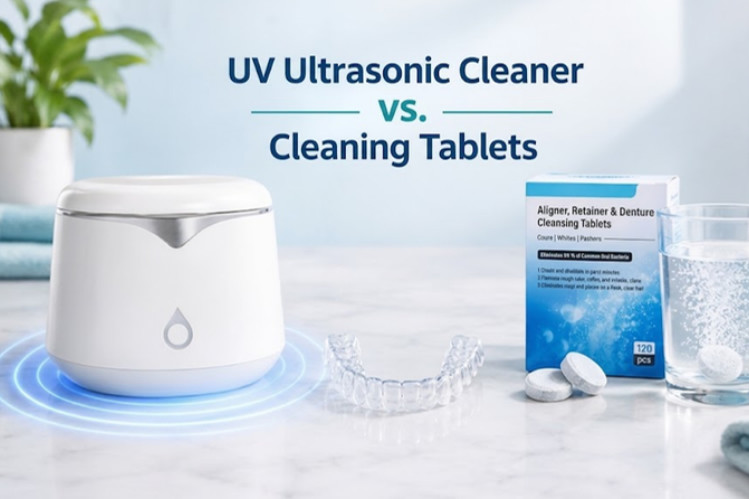 UV Ultrasonic Cleaner vs. Cleaning Tablets: Which Keeps Aligners Cleanest?
A UV ultrasonic cleaner offers a deeper, device-based cleaning approach, while cleaning tablets give you a simple soak-and-rinse option. Both can help remove daily buildup, but the way they clean your aligners is quite different.
Read More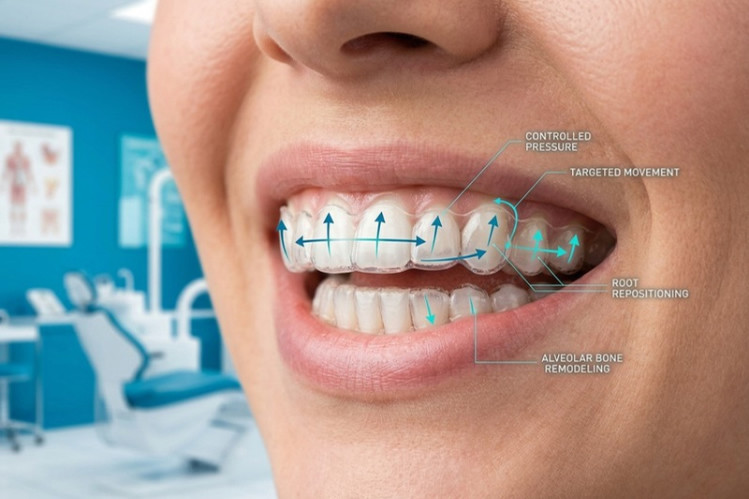 Science Behind a Perfect Smile: How Clear Aligners Shift Your Teeth Safely
Clear aligners work by applying controlled, gentle pressure to specific teeth, gradually guiding them into planned positions over time. Each custom-made aligner fits over the teeth and creates small movements according to a digital treatment plan. As the teeth respond to this pressure, the surrounding bone and periodontal ligament remodel to support their new positions. Caspersmile uses a planned series of clear aligners to guide tooth movement throughout treatment.
Read More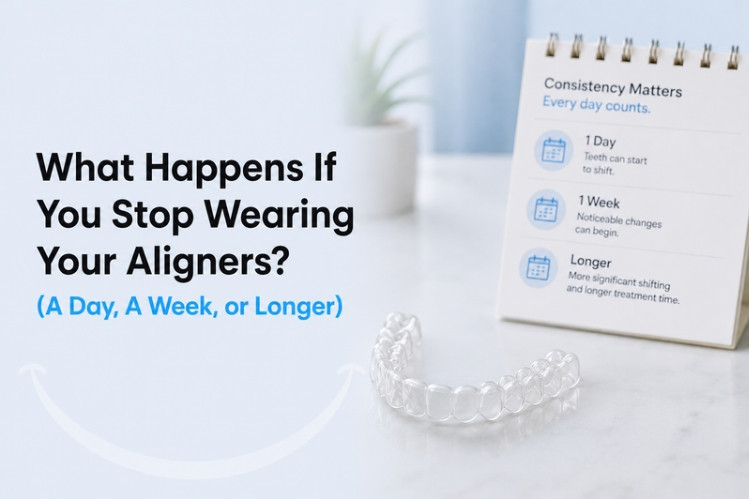 What Happens If You Stop Wearing Your Aligners? (A Day, A Week, or Longer)
If you stop wearing clear aligners, your teeth start drifting back toward their original position almost immediately, and the longer the break lasts, the harder it becomes to reverse. That's the short answer. But how much damage actually gets done depends on the timeframe. A missed evening is very different from a missed month.
Read More
 UK
 USA
 Australia