
Anyone who ever wants to straighten their teeth thinks braces are the way to go. And this thought can sometimes make you retract and think, do I even want to wear metal wires for months, if not years? You're not alone. More and more people are looking for alternative ways to fix crooked teeth without braces, and the good news is, it's absolutely possible.
Whether you're put off by the look of traditional braces, worried about the discomfort, or just want a faster, more discreet solution, there are non-braces teeth straightening options that can help. In this blog, we'll explore the best alternatives, what works (and what doesn't), and how to decide what's right for your smile.
First things first: braces work. They’re tried, tested, and trusted by orthodontists everywhere.
But still, many of us hesitate. Maybe it’s the visibility. Maybe it’s the discomfort. Maybe it’s the cost. Or maybe it’s just the idea of reliving high school flashbacks you’d rather forget.
Before we dive into the alternatives, it helps to know what we’re dealing with.
Crooked teeth can be caused by:
Some people have just one or two teeth slightly out of place. Others might have crowding, spacing, or bite issues that make their smile (and even chewing) feel off.
Now let’s get to the fun part: how to straighten them, without braces.
Whatever your reason, you’re not alone in wondering about non-braces teeth straightening options. And the good news is: they do exist.

One of the most well-known and widely used alternatives is clear aligners for crooked teeth . Brands like Invisalign and, more recently, at-home options like Caspersmile have made aligners mainstream.
Clear aligners are custom-made, transparent trays that gradually move your teeth into alignment. You wear each set for about two weeks before switching to the next. The best part? They're nearly invisible and removable.
Pros:
Cons:

If your teeth are only slightly misaligned or you’re more concerned about the look rather than the function, veneers for teeth straightening might be an option.
Veneers are thin shells (usually porcelain or composite) placed over the front of your teeth to improve appearance. They can make your teeth look straighter, whiter, and more uniform.
Pros:
Cons:
Best For:
People with slightly crooked front teeth who want a cosmetic fix rather than functional correction.
With the rise of telehealth and home-based treatments, many companies now offer teeth straightening at home. These kits typically involve taking impressions at home, receiving a treatment plan remotely, and wearing clear aligners without visiting a clinic.
Yes, for mild to moderate cases. The key is choosing a provider that offers professional oversight, like Caspersmile, which uses licensed dental professionals to review and guide your treatment.
Pros:
Cons:
For minor misalignment or uneven teeth edges, contouring (also known as enameloplasty) can be a super quick solution.
A dentist gently removes small amounts of enamel to reshape the teeth. It’s pain-free, instant, and doesn’t require follow-up.
Pros:
Cons:
We’ll keep this short: don’t do it.
Trying to shift your teeth using rubber bands, paperclips, or any other unapproved method can cause permanent damage, including tooth loss. Always stick with dentist-approved options.
In many mild-to-moderate cases, Invisalign is just as effective as braces. It may even be faster for some adults. However, braces still have the edge for complex bite corrections. Here is a quick comparison between clear aligners and braces .
| Feature | Clear Aligners | Traditional Braces |
| Visibility | Nearly invisible | Very visible |
| Comfort | Smooth and wire-free | Brackets and wires |
| Removability | Can take out to eat or brush | Fixed to your teeth |
| Maintenance | Easy to clean | More complicated hygiene |
| Best For | Mild to moderate issues | Complex cases |
Bottom line? If you qualify for clear aligners and want the freedom to eat, smile, and live your life without a mouth full of metal, they’re worth exploring.
Absolutely. From clear aligners to cosmetic veneers, there are more ways than ever to fix your smile without metal brackets. It all depends on your teeth, your goals, and your budget. The most important step? Talk to a dental professional to figure out what’s safe and effective for your situation.

Curated the best for your knowledge
 Are Ultrasonic Cleaners Worth It for Clear Aligners?
Yes, ultrasonic cleaners for clear aligners can be worth it, especially for removing plaque, debris, and buildup that regular brushing may miss. They use high-frequency sound waves to create tiny bubbles that help loosen buildup from the trays and other orthodontic appliances, including retainers, mouthguards, and night guards. However, they are not essential for everyone and have some limitations. Here’s how ultrasonic cleaners work, their benefits and drawbacks, and how to use one safely.
Read More The Aligner Diet: Can Clear Aligners Really Cause Weight Loss?
Some people notice they've lost a little weight after starting clear aligner treatment. It can happen, especially during the first few weeks, when taking the trays out for every meal and snack takes some getting used to. Sore teeth can also make eating less appealing for a day or two. The amount of weight lost varies from person to person, and not everyone experiences this change. Below, we'll break down why it happens, whether it's actually good for you, and what to know before treating your aligners like a diet plan.
Read More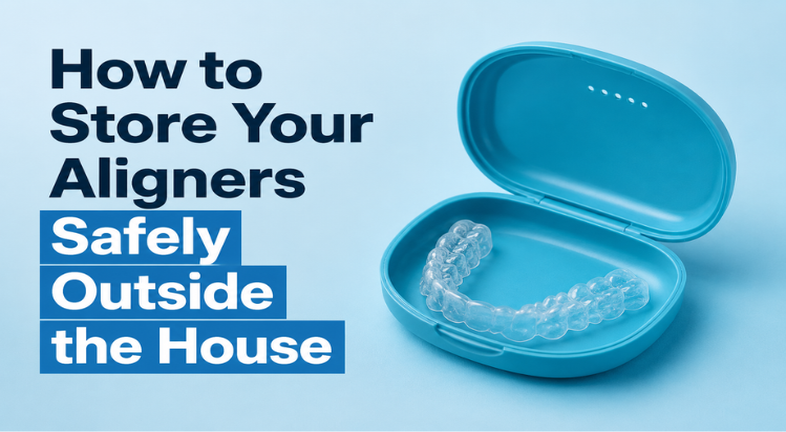 How to Store Your Aligners Safely Outside the House
Taking your clear aligners out while you're away from home is part of everyday life. The important part is knowing where to keep them until it's time to wear them again. Whether you're eating at a restaurant, traveling, running errands, or attending a social event, instead of leaving them on the table or wrapping them in a tissue or napkin, place them in a protective aligner case. Poor storage can lead to lost, damaged, or dirty aligners.
Read More


Heading