- Problems with traditional braces
- Oral Hygiene Issues and Discomfort with Braces
- What Are Clear Plastic Aligners
- How Do Clear Aligners Work?
- Are Clear Aligners Painful?
- What Problems Can Clear Aligners Fix?
- Dangers of DIY Teeth Straightening
- How Professional Home Teeth Straightening Works
- Benefits of Home Teeth Straightening
- Advantages of At-Home Aligners
- Final Thoughts
With so many ways to straighten teeth, it’s hard to know which method is best for you. Traditionally, metal braces were the only orthodontic solution; then over time, more discreet braces, including incognito and ceramic braces, were introduced. Self-ligating Damon Braces (1) with no elastic ties are also available. These attract less plaque and make oral hygiene more manageable; however, they cost more than other braces and are harder to find.
However, the most significant breakthrough in orthodontic appliances was the introduction of clear aligners. Sometimes referred to as clear braces, these appliances provide a popular, hi-tech alternative to conventional metal or ceramic braces.
Problems with traditional braces
Conventional braces have metal brackets attached to the teeth and joined together with metal wires known as archwires. They work by applying gentle pressure to the teeth to move them into their correct position. Regular dental visits to tighten the archwires are required throughout treatment to ensure constant force is applied to the teeth.
Since they use more force than aligners, metal braces are typically the best solution for complex orthodontic problems. However, they’re also the most noticeable type of braces, and, unfortunately, the disparaging term “metal mouth” is still in use.
Alternatives such as ceramic braces are less conspicuous than their metal counterparts and consist of tooth-coloured archwires and clear brackets. But on the downside, ceramic braces are prone to staining, and the brackets can break more easily than metal (stainless steel) varieties.
Oral Hygiene Issues and Discomfort with Braces
Metal and ceramic braces are both fixed appliances – they remain in the mouth for the duration of treatment, which can be one to two years or even longer. This action poses oral hygiene risks because the wires and brackets make effective brushing and flossing difficult. As a result, bacterial plaque can accumulate leading to cavities or periodontitis (gum disease) and possible tooth loss.
Another issue with fixed braces is that they can still be uncomfortable to wear despite advances in technology.
What Are Clear Plastic Aligners
All the above problems are addressed with the development of removable clear plastic aligners as a state-of-the-art teeth straightening method.
Many companies have taken progression one step further with the rise of aligners sent directly to the door, enabling people to straighten their teeth at home. This process negates the need to visit a dental clinic – which dramatically reduces costs.
How Do Clear Aligners Work?
Clear plastic aligners straighten teeth in a series of minuscule movements using aligner trays worn sequentially.
The trays fit over the teeth like a mouthguard and are worn for 20 to 22 hours a day, and because they are made from clear plastic, they are barely visible in the mouth. No one needs to know that you are undergoing orthodontic treatment.
Unlike fixed braces, the wearer can remove their aligners to eat and clean their teeth. This makes it easier to maintain good oral hygiene.
The removability of plastic aligners has other benefits, too. Since the aligners are removed for eating, there’s no need to adhere to dietary restrictions that come with fixed braces (2) that can be damaged by hard or sticky foods.
Are Clear Aligners Painful?
The smooth edges of plastic aligners prevent the gum irritation that can occur with the wires and brackets of braces.
However, you may experience minor discomfort from your aligners, which should ease over time. Don’t worry, it’s a sign they’re doing their job.
Half of aligner users report no discomfort. (3)
What Problems Can Clear Aligners Fix?
Depending on the severity of the orthodontic problem, clear aligners can provide an effective solution in cases of:
- Crooked teeth
- Crowded teeth
- Gapped teeth
- Protruding teeth
Clear aligners can also benefit individuals with bite problems such as:
- Underbite – when lower teeth overlap upper teeth.
- Crossbite – upper teeth closing on the inside of lower teeth.
- Overbite – upper front teeth overlapping lower teeth.
Dangers of DIY teeth straightening
Some misguided individuals are tempted to try DIY “orthodontic easy fixes” that they find on the internet.
These spurious online “how-to” guides on teeth straightening proliferate the digital landscape and especially social media. And they can be dangerous.
Some advocate using household objects as makeshift orthodontic tools – string, paper clips, rubber bands, pencils, and dental floss, for example. Besides the risk of choking, this could cause irreversible dental damage and result in oral infection.
The only way to straighten your teeth safely and effectively at home is under professional supervision.
How professional home teeth straightening works
When straightening your teeth at home with the help of dental professionals, everything you need to start and complete your treatment safely is delivered to your door.
We will send you an easy-to-use impression kit to create moulds of your teeth, which are used to make a series of customised clear aligners to move your teeth into their correct position progressively.
Benefits of home teeth straightening
In-practice orthodontic treatment is a lengthy, costly process requiring multiple visits to your dentist.
At-home teeth straightening means you never have to set foot in a dental clinic. Instead, your treatment is planned and monitored remotely by qualified dental experts.
Besides convenience, straightening your teeth at home can save you hundreds of pounds compared with in-clinic treatment. And you’ll get your new smile a lot faster.
Advantages of Straight My Teeth home aligners
At-home teeth straightening from affordable brands like Caspersmile can also save you more than £1,000 compared with in-clinic orthodontics, and they offer monthly payment options if you don’t want to pay the total cost upfront.
Are you ready to straighten your smile using clear aligners?
Take a free online assessment now to find out whether clear aligners are right for you.
Final Thoughts
Clear aligners are a good choice for many people looking to straighten their teeth discreetly. They offer the convenience of being removable and are less noticeable than traditional braces. You should consider your lifestyle, and the severity of your dental issues, and consult with an orthodontist to determine if clear aligners are suitable for achieving your dental goals.

 Are Ultrasonic Cleaners Worth It for Clear Aligners?
 The Aligner Diet: Can Clear Aligners Really Cause Weight Loss?
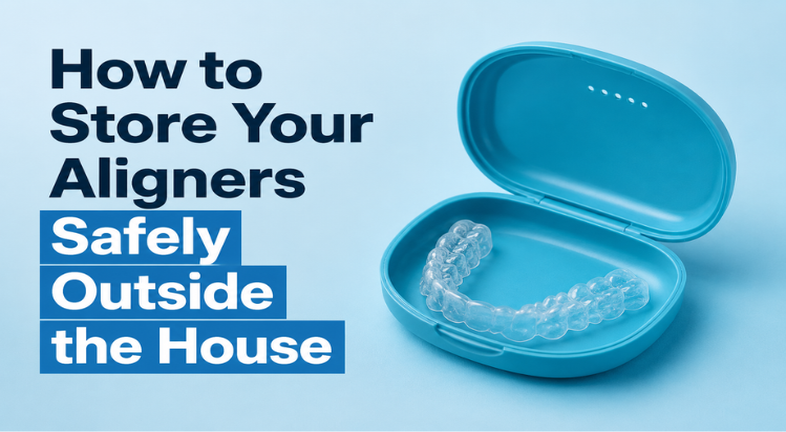 How to Store Your Aligners Safely Outside the House


Heading