Table of Content
- Bacteria in The Mouth
- The Relationship Between Sugar and Plaque
- Crooked Teeth and Cavities
We all know that sugar is bad for your teeth and if you drink lots of fizzy drinks and eat lots of sweets, you are likely to be visiting the dentist soon. But it’s not just the sugar itself that causes a tooth cavity, it’s the complex chain of events that happens in your mouth after you eat something sugary. However, everybody knows that sugar is bad, not that many people understand why because they don’t know what happens to your teeth and gums when you eat sugar. However, understanding the process will help you to improve your dental health and avoid cavities in the future. So, how does sugar cause tooth cavities and what happens to your teeth and gums when you eat sugary foods?
Bacteria in The Mouth
Your mouth is filled with all sorts of different types of bacteria. People often get the wrong idea about bacteria and they think that it’s all bad, but that isn’t the case. There are a lot of good bacteria in the mouth that are beneficial for your dental health. Unfortunately, there are a lot of bad bacteria as well, and it reacts when it comes into contact with sugar.
Studies show that there are certain types of bacteria in the mouth that digest sugar and produce acid in the mouth. This acid wears down the enamel on your teeth by removing minerals in a process called demineralization.
The saliva in your mouth tries to combat this by remineralizing your enamel to stop it from wearing down. Minerals like Calcium and Phosphate help to repair the damage caused by the excess acid. The fluoride in your toothpaste also helps this repair process.
If you only eat small amounts of sugar, the saliva has time to catch up and stop the enamel from wearing away. However, if you eat too much sugar, the bad bacteria wins out and the enamel begins to wear away. When the enamel wears away too much, a hole forms and this is what we call a tooth cavity. If these cavities are left untreated, they keep growing deep into the tooth and that is when you start to experience pain and even headaches.
The Relationship Between Sugar and Plaque
Unfortunately, that is not the only way that sugar can cause a tooth cavity. When you eat sugar, it attracts a lot of bad bacteria, which can lead to a buildup of plaque. Two types of bacteria called Streptococcus mutans and Streptococcus sobrinus love sugar, and they gravitate towards it in your mouth. They then digest it and form a sticky film over the teeth, which we know as plaque.
When you brush your teeth, this plaque is removed and you don’t need to worry about getting a tooth cavity. However, if your sugar intake is very high, you are fighting an uphill battle to brush it all away and when plaque starts to build up in your mouth, it changes the pH (a measure of how acidic something is). A neutral pH is 7 and if the pH drops below 5.5, the environment in your mouth becomes too acidic and this is when the enamel on the teeth starts to wear down, causing a tooth cavity.
To begin with, the plaque dissolves the enamel and creates lots of tiny holes that are invisible to the naked eye. But, eventually, these tiny holes join up to form larger ones and that is when you develop a painful tooth cavity.
Crooked Teeth and Cavities
Cutting your sugar intake is the best way to avoid a tooth cavity. However, we all have some sugar in our diets, even if it is natural sugar from fruit, for example. That’s why it is so important to brush properly to remove all of the plaque. Unfortunately, if you have crooked teeth, this can be difficult. It is easier for plaque to hide in the hard-to-reach gaps between crooked teeth, so you are far more likely to get a tooth cavity, even if you are brushing twice a day and cutting back on sugar.
Finding ways to straighten your teeth is important because not only does it make your smile look a lot better, but it will also protect you from getting a tooth cavity. Clear aligners just like the ones offered by Caspersmile, are perfect for people who have slightly crooked teeth and want to straighten them out without the need for invasive dental work. You can browse our full range right here on our website.

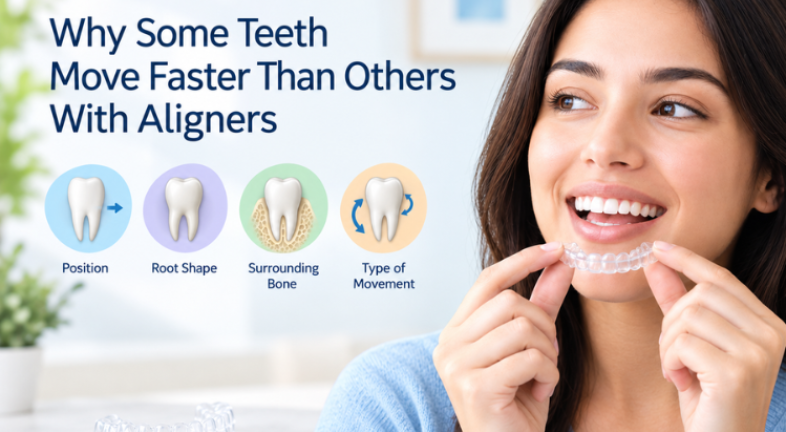 Why Some Teeth Move Faster Than Others With Aligners
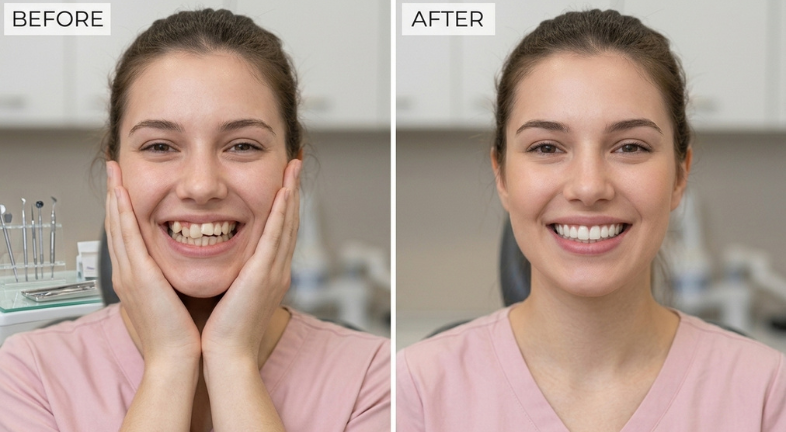 Do Clear Aligners Change Your Face Shape?
 What to Do If You Lose Your Aligners While Traveling



Heading